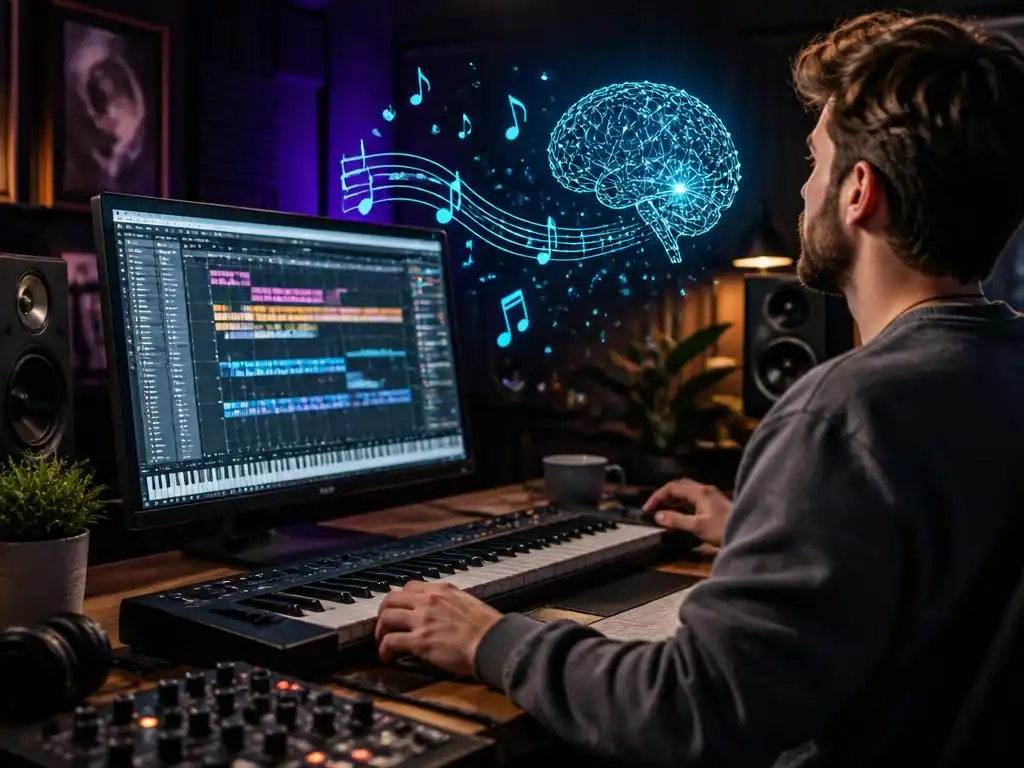
The modern music industry is undergoing a massive transformation with the rise of automated composition software. Many bedroom producers and professional artists now rely on artificial intelligence songwriting to overcome creative blocks, helping them generate unique chord progressions and melodic structures in a fraction of the time.
As machine learning algorithms become more sophisticated, integrating these smart assistants into your daily studio routine can dramatically elevate your output. This practical guide explores how you can co-create with digital systems to produce exceptional, emotionally resonant tracks that captivate your audience.
How artificial intelligence songwriting works for modern artists
Understanding the underlying mechanics of modern digital assistance is crucial for any creator wanting to enhance their current musical output. These highly advanced computer systems analyze thousands of existing hit songs to identify recurring patterns in chord changes, complex rhythmic structures, and lyrical cadences, successfully providing you with a solid production foundation.
By translating complex mathematical probabilities into actual MIDI notes and high-quality audio files, these programs act as an incredibly tireless partner. Integrating artificial intelligence songwriting into your private studio environment allows you to bypass the initial empty-page anxiety and start working directly with fresh, highly inspiring musical ideas immediately.
Instead of completely replacing human emotion, these systems simply organize musical data to present you with multiple exciting sonic directions. You can easily select your desired tempo, genre, and key signature, leaving all the complex technical calculations to the background software engine while you focus entirely on the final artistic direction.
The evolution of algorithmic music creation
Historically, computer-generated melodies relied on strict, pre-programmed rules that often sounded robotic and lacked any organic flow. Today, deep neural networks study vast libraries of classical, pop, and rock music, learning exactly how professional human composers build tension and release throughout a track to keep global listeners highly engaged.
This incredible technological leap has shifted the tool from a mere novelty into a highly functional co-writer for serious studio musicians. Modern software adaptively reacts to your specific real-time inputs, meaning the generated outputs are highly customized to fit your unique artistic vision rather than ever sounding flat or generic.
Practical benefits of virtual music assistants
One of the primary advantages of utilizing this technology is the sheer speed of generating multiple rough structural drafts for immediate review. Instead of spending endless hours struggling to find the perfect bridge, you can generate five distinct musical options in seconds and choose the most compelling path forward.
Furthermore, regularly working with dynamic digital generators forces you completely out of your standard comfort zone by introducing highly unexpected harmonic shifts. These beautiful accidental masterpieces often lead to highly original completed songs that you might never have conceived using traditional piano or guitar composition methods in your studio.
🤝 The Co-Creation Philosophy
AI should never replace the soul of a musician. Instead, think of it as a highly capable assistant that handles the mechanical drafting, leaving you fully in charge of the ultimate emotional and creative decisions.
Integrating artificial intelligence songwriting in your workflow
Successfully adding these digital systems to your standard studio setup requires a systematic approach that carefully balances modern technology with raw creative instinct. You should treat the generated MIDI files as raw material, ready to be sliced, rearranged, and eventually performed with organic physical instruments for a much warmer final sound.
Many creative composers begin by feeding their favorite chord progressions into the system to see how it builds complex melodies. This interactive loop between human intent and algorithmic response creates a highly dynamic creative environment where artistic blocks simply disappear under the weight of endless custom possibilities for your upcoming tracks.
Leveraging these innovative tools also helps you manage your time more effectively, especially when you are working under tight commercial industry deadlines. Utilizing advanced AI-driven music tools ensures you can deliver high-quality structural drafts to clients quickly, while still easily retaining your unique sonic signature on the final mix.
Choosing the right digital composition platform
Selecting the perfect software platform depends heavily on your specific artistic goals, technical skills, and current hardware production setup. Some niche applications focus purely on semantic lyric generation, while other advanced suites provide fully arranged backing tracks complete with drums, bass lines, and synthesizer parts ready for immediate export.
It is absolutely essential to choose a platform that allows easy raw MIDI export, giving you total control over the virtual instruments used. Just as software developers study essential integration techniques to ensure seamless overall system performance, you must ensure your smart music tools fit comfortably inside your existing digital audio workstation.
| Creative Aspect | Artificial Intelligence | Human Musician |
|---|---|---|
| Idea Generation | Instantaneous (Thousands of variations) | Slower (Requires deep emotional focus) |
| Emotional Depth | Mathematical (Derived from analysis) | Authentic (Based on personal life experiences) |
| Refinement & Voice | Limited to style parameters | Infinite (Shaping unique artistic identity) |
Generating unique chord progressions effortlessly
Creating an engaging, emotionally resonant harmonic foundation is often the most challenging part of writing a new hit song. By utilizing advanced digital generators, you can easily escape the standard four-chord loops that dominate mainstream radio, introducing sophisticated modal interchanges and completely unexpected key modulations into your work seamlessly.
These highly sophisticated chord progressions can then be dragged directly into your active project, allowing you to edit individual notes easily. This dedicated hands-on approach guarantees that the final composition still feels deeply personal to you, even if the initial creative spark originated from an automated mathematical sequence.
Overcoming common creative hurdles in the studio
Every musical artist eventually encounters a difficult creative wall where no new ideas seem to flow naturally in the studio. When your inspiration dry spell lasts for several weeks, having a reliable digital collaborator ready to suggest unusual melodies can instantly reignite your personal passion for professional music production.
Think of this entire process like systematically troubleshooting system performance when physical commercial machinery fails to produce results under heavy pressure. By carefully analyzing what is blocking your daily studio workflow, you can use automated tools to clear the mental clutter and keep your creative song output flowing steadily.
Rather than viewing modern technology as an active threat to your musical integrity, you should embrace it as a liberating artistic force. It allows you to delegate repetitive backend tasks, such as programming complex drum fills, so you can spend your valuable mental energy on raw vocal delivery and creative song arrangement.
💡 Quick Tip: Maintain Your Original Voice
Always customize the outputs. If a platform generates a melody, change at least three notes, swap the synth patch, or apply unique audio effects to make sure it sounds distinctively like you.
Designing memorable vocal melodies and lyrics
Writing deeply meaningful lyrics that resonate with a global audience can be an incredibly slow and emotionally draining process in the studio. Modern algorithmic composition software excels at suggesting unique metaphors, fresh rhyme schemes, and engaging thematic concepts based on a simple prompt, helping you write your verses much faster.
These machine-generated words serve as an excellent starting point, which you can then refine manually to match your personal voice. By blending these digital concepts with your real-world personal experiences, you easily create a compelling lyrical narrative that feels both ultra-modern and deeply authentic to your dedicated audience.
Refining automated song generation elements
Once you have successfully generated the raw digital pieces of your track, the real human artistry begins during the hands-on editing phase. You must carefully evaluate each section, removing unnecessary notes and adding subtle organic performance dynamics that a computer cannot easily replicate on its own inside the software.
Carefully adjusting the velocity of MIDI notes, adding slight human timing imperfections, and choosing high-quality virtual acoustic instruments are all critical production steps. This meticulous final refinement process ensures that your completed track sounds incredibly polished, professional, and entirely organic to the average consumer listening on streaming platforms.
Maximizing your distribution and marketing potential
Creating a great song is only half the absolute battle in today’s highly competitive, saturated global digital music market. To ensure your tracks actually reach the right target audience, you must implement comprehensive promotional marketing strategies that elevate your online presence across all major commercial music streaming platforms.
Just as modern businesses design strategic marketing plans to stand out in crowded search landscapes, independent musicians must carefully manage their entire online digital footprint. Optimizing your release assets, building professional profiles, and increasing track search visibility easily helps your unique creations connect directly with target listeners who truly appreciate your specific musical genre.
Combining high-speed digital music production with targeted online search optimization techniques allows you to build a highly sustainable independent music career. By consistently releasing high-quality material, you easily keep your audience engaged while building strong authority with the complex search algorithms that control influential music streaming playlists.
🚀 Essential Workflow Checklist
-
✔
Define your intent: Decide if you need chords, lyrics, or a complete structural blueprint before starting. -
✔
Import to DAW: Always export MIDI files to customize instrument patches and velocities. -
✔
Inject human soul: Record at least one live instrument or vocal track to ground the digital composition.
Building a local and global fanbase online
Connecting with passionate local fans is a fantastic way to build a solid professional foundation before expanding to international audiences. Leveraging online business directories, localized community forums, and targeted social media campaigns successfully ensures your live performances and digital song releases receive maximum local attention first.
This regional focus closely mirrors the techniques used for boosting online presence in standard trade and service industries, where targeting local search queries drives actual real-world traffic. By establishing a strong local footprint, you create a dedicated hometown community that will support your long-term creative musical journey.
Once you have successfully mastered your local market, you can use your high production output to target global niche communities online. Using smart, customizable digital melody generators keeps your release pipeline completely full, allowing you to feed international streaming algorithms with constant high-quality new releases throughout the year.
Navigating the ethics of automated music creation
As these creative systems become far more accessible, industry discussions surrounding legal copyright, intellectual property, and artistic ownership are growing much more complex. Musicians must fully understand who owns the rights to a track when the initial melodic ideas were completely generated by an automated computer algorithm.
Currently, most modern platform terms of service allow you to use generated musical material for commercial purposes without paying royalties. However, keeping detailed studio records of your personal modifications is highly recommended to protect your master work and easily prove your active human creative contribution in the process.
Approaching this digital landscape with total transparency builds deep trust with your listeners, who truly appreciate knowing how your music is crafted. Sharing your unique collaborative creative process with your online audience can actually become an incredibly compelling, highly marketing-friendly part of your overall artistic brand identity.
📝 Key Takeaways for Producers
• AI is a powerful collaborator that speeds up your drafting and breaks creative block.
• Always export MIDI to retain control over instrumentation, mixing, and dynamics.
• Blend machine-generated frameworks with live instruments to maintain emotional depth.
Embracing the future of musical expression
The rapid ongoing evolution of modern technology ensures that creative assistant tools will only become far more intuitive and powerful over time. Creative artists who actively choose to learn these advanced systems now will be far better prepared to successfully navigate the future commercial music business landscape.
Ultimately, the unique human element remains entirely irreplaceable because only we can feel the true emotional depth of a lyric or melody. By mastering these collaborative digital tools, you can easily unleash your full potential, turning abstract musical ideas into beautifully finished songs much faster than ever before.
